AI is expected to change jobs by taking over menial tasks and create new employment. The way we work is expected to shift, but humans will be given the chance to focus on the more challenging, interesting sides of their professions while AI technologies take on the tedious work.AI is expected to change jobs by taking over menial tasks and create new employment. The way we work is expected to shift, but humans will be given the chance to focus on the more challenging, interesting sides of their professions while AI technologies take on the tedious work.
According to the statistics, the AI market is expected to reach $190 billion by 2025. By 2021, global spending on cognitive and AI systems will reach $57.6 billion, while 75% of enterprise apps will use AI technologies. In terms of national GDPs, AI is expected to boost China by 26.1% and the United States by 14.5% by 2030.
On a more local level, some 83% of businesses say that AI represents a strategic priority, while 31% of creative, marketing, and IT professionals look to invest in AI technologies over the following 12 months. Similarly, some 61% of business professionals point to AI and machine learning as their most significant data initiative over the coming year. In addition, some 95% of business executives who are skilled in using big data also use AI technologies.
So how will Ai impact the IT industry?
Improvement in security systems.

Data security is of critical importance when it comes to securing personal, financial, or, otherwise, confidential data. Government and private organizations store large amounts of customer and strategic data that needs to be secure at all times. By using advanced algorithms and by making use of Machine Learning, Artificial Intelligence can provide a necessary level of protection to create a high-security layer within all of these systems. AI will help identify potential threats and data breaches, while also providing the needed solutions and provisions to avoid any existing system loopholes.
Improvement in the coding industry.
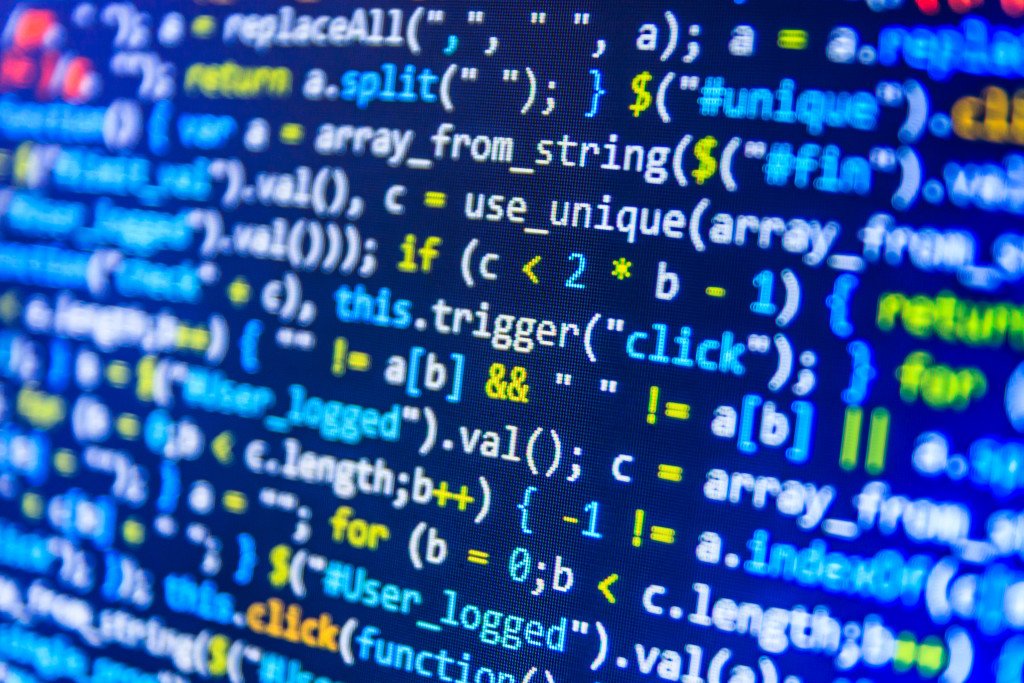
Artificial Intelligence also uses a series of algorithms that can be applied directly to help programmers when it comes to detecting and overcoming software bugs, as well as when it comes to writing code. Some forms of Artificial Intelligence have been developed to provide suggestions when it comes to coding, which, in turn, helped increase efficiency, productivity, and provide a clean and bug-free code for developers. By looking at the structure of the code, the AI system will be able to provide useful suggestions, not only improving the overall productivity but also help cut on downtime during the production process.
AI will enable next-gen consumer experiences.

Next-generation consumer experiences like the metaverse and cryptocurrencies have garnered much buzz. These experiences and others like them will be critically enabled by AI. The metaverse is inherently an AI problem because humans lack the sort of perception needed to overlay digital objects on physical contexts or to understand the range of human actions and their corresponding effects in a metaverse setting.
More and more of our life takes place at the intersection of the world of bits and the world of atoms. AI algorithms have the potential to learn much more quickly in a digital world (e.g., virtual driving to train autonomous vehicles). These are natural catalysts for AI to bridge the feedback loops between the digital and physical realms. For instance, blockchain, cryptocurrency and distributed finance, at their core, are all about integrating frictionless capitalism into the economy. But to make this vision real, distributed applications and smart contracts will require a deeper understanding of how capital activities interact with the real world, which is an AI and ML problem.
 Quantum industries